Waldorf, Maryland
Garage Door Replacement in Waldorf, MD
Garage Door Replacement in Waldorf, Maryland, with the published national price range up front, the full system inspected on site, and the price stated before any work begins.
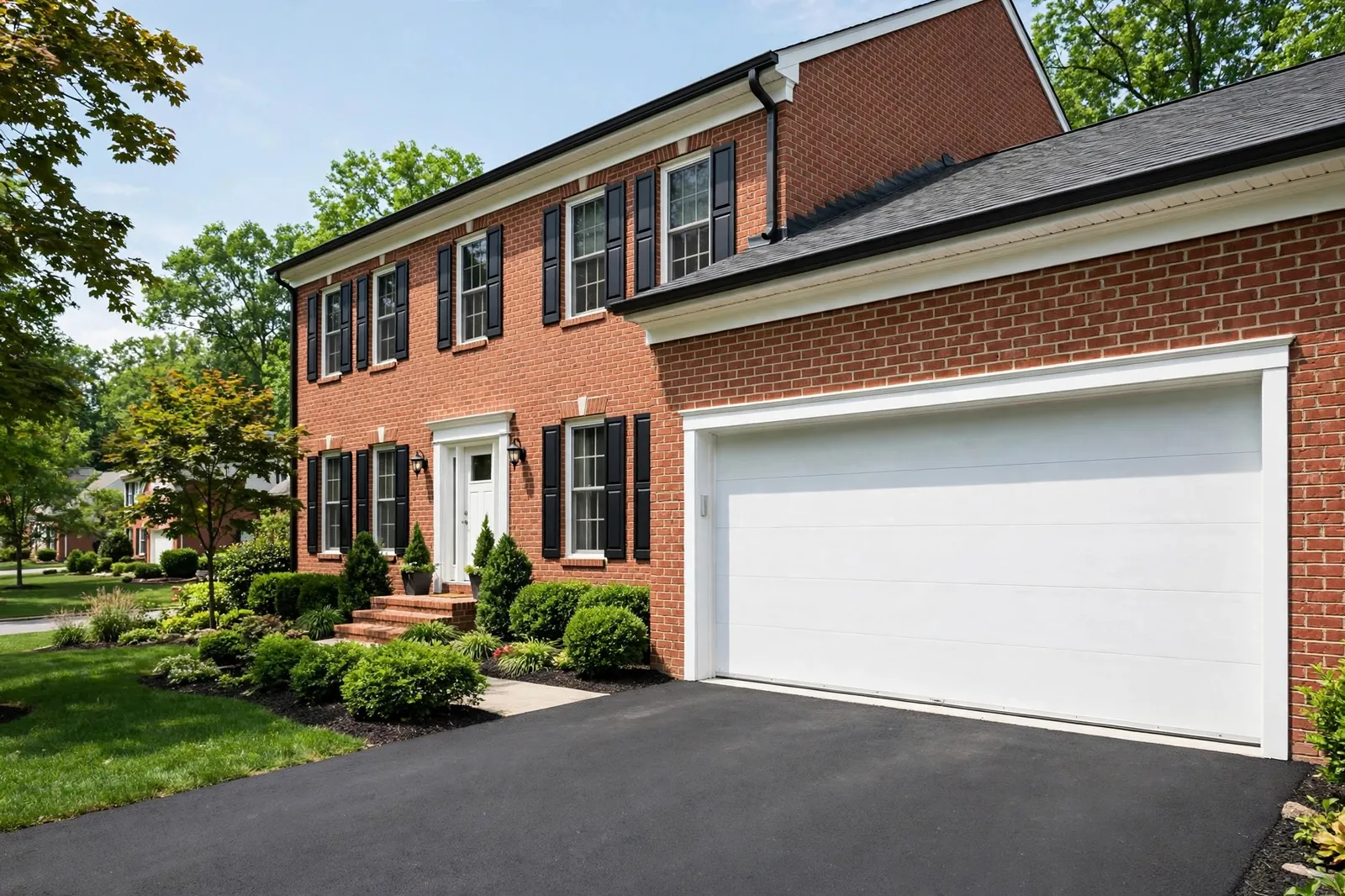
Waldorf, Maryland
Garage Door Replacement in Waldorf, Maryland, with the published national price range up front, the full system inspected on site, and the price stated before any work begins.
Most garage doors in Waldorf do not wear out in a single moment. They rust at the bottom section where road salt and splash water sit. They dent, crack at the hinge lines, and grow louder every year as rollers and springs tire together. Then one day the homeowner stands in the driveway, looks at the face of the house they have been maintaining everywhere else, and admits the door has become the oldest-looking thing on the property. That is usually when replacement enters the conversation, and it is often the right call: much of Waldorf's housing stock went up between the 1970s and the 2000s, and doors from those build years are at or past the end of their service lives.
A replacement is not just a prettier version of the same door. It is a new door, new tracks, new springs, and new seals fitted as one system, with the opener checked against the new door's weight. This page covers how to tell when replacement beats repair, what the work involves, and the published national cost ranges, labeled as national, that the decision runs on.
Some damage is local. A single backed-into section on an otherwise sound door, where the manufacturer still supplies that section, is a panel repair. Replacement takes over when the problems stop being local. Rust that has eaten through the bottom section will not stop at the next one up. Sections that have cracked around the hinges transfer stress badly and make the whole door rack as it travels. A door that predates photo-eye safety sensors is missing protection that has been standard on new doors for decades.
Arithmetic settles the close calls. When a door needs springs, cables, rollers, and a section in the same season, the household is paying replacement-sized money in installments while keeping an old door. And when the door's line has been discontinued, every future repair becomes a hunt for parts that may not exist. We will show you the repair figure and the replacement figure side by side where both are real options, because a door you are talked out of replacing unnecessarily is as bad a result as one you are talked into replacing too soon.
What a replacement includes matters as much as the door itself. New tracks replace the bent and worn ones the old door ran in. New springs are sized to the new door's weight, not reused from a door that weighed something else. Fresh perimeter seals and a new bottom seal close the gaps that years of settling opened. The old door and hardware get hauled away as part of the work, not left in the driveway as your problem.
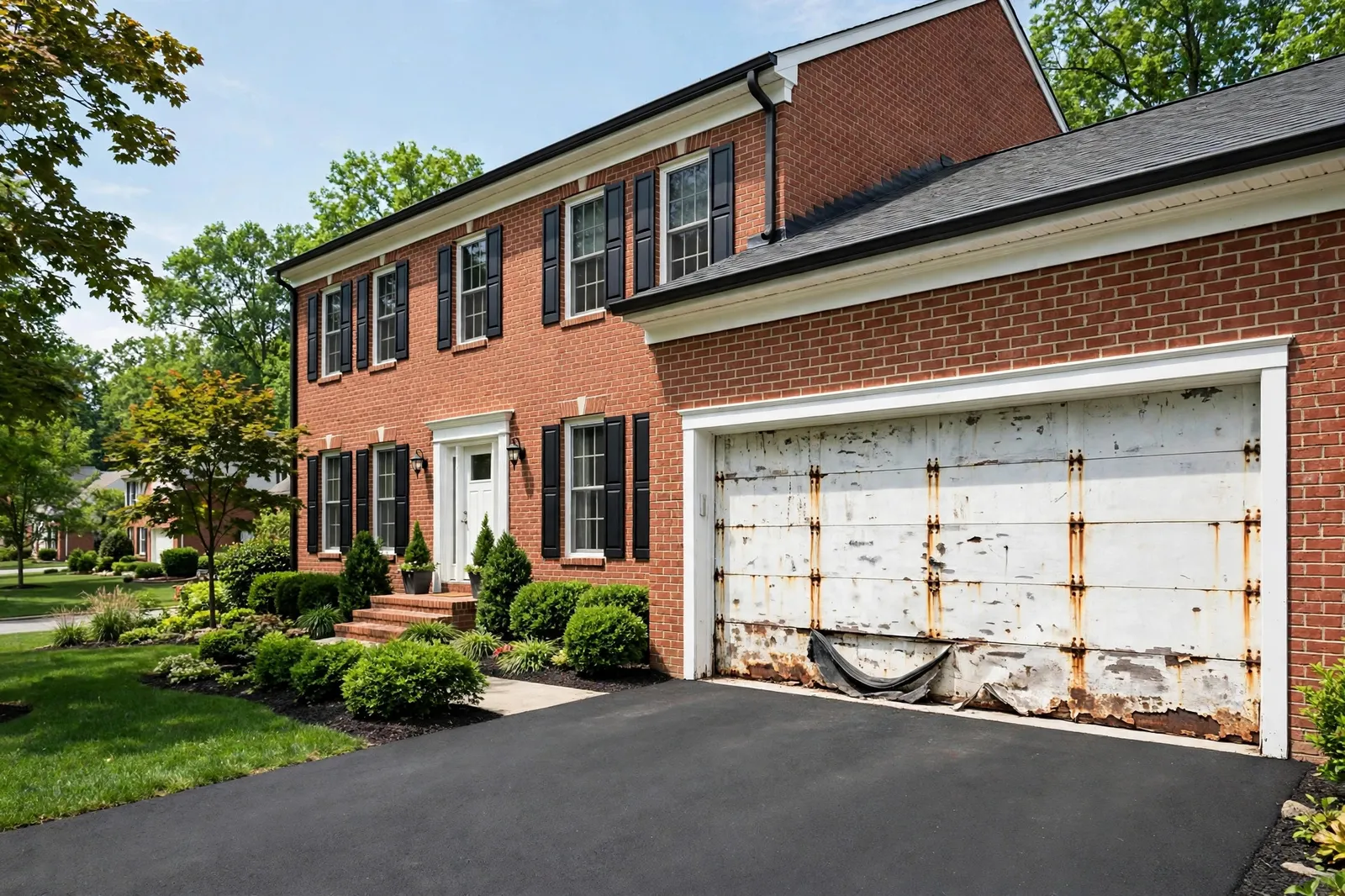
A Pinefield home had a steel door from an early build of the neighborhood, rusted through at the bottom section, cracked at two hinge lines, and loud enough to announce every departure. We removed the old door, tracks, and springs, installed an insulated steel door with new tracks, a torsion spring set sized to the new door, and new weather seals throughout, confirmed the existing opener was rated for the new door's weight, and hauled the old sections away.
There is no published local price list for door replacement in Waldorf, so the figures that follow are published national ranges, labeled as national, for planning and comparison against any quote.
Angi 2026 puts a typical residential door replacement at $754 to $1,707 nationally, with an average around $1,231. Published figures from Housecall Pro's 2026 table place a service call at $75 to $150, which is the sensible first step when you are deciding between repairing your door and replacing it. Insulated doors, window sections, carriage-house styling, and wood sit in the upper part of the replacement range; a basic single steel door sits near the lower end.
Two questions keep a replacement quote honest. The first is what the number includes: door, tracks, springs, seals, and haul-away should all be named, since a low figure that excludes hardware is not a low figure. The second is what happens to the opener, which often survives a replacement fine if it is sized for the new door's weight, and should be confirmed rather than assumed in either direction.
The project starts with a decision visit: the old door inspected section by section, the tracks and springs assessed, and the repair-versus-replace figures laid out plainly. Measurements get taken at the finished opening, and style, material, and insulation get chosen against the house and how the garage is used. Nothing is ordered off a guess at a door size.
Replacement day runs in a set order. The old door comes down under control, section by section, with spring tension released safely before hardware is disturbed. Old tracks follow it out. The new tracks go up true, the new door is built in place from the floor section up, springs are fitted to its weight, and the door is balanced and cycled by hand. The opener is reconnected only after the door proves balanced, its limits and force reset for the new door, and the visit ends with the seals checked, the old materials gone, and a walkthrough of the final bill against the figures you were given.
Published national ranges from Angi 2026 put a typical residential replacement at $754 to $1,707, averaging about $1,231, with insulated, styled, and wood doors in the upper part of the range and basic single steel doors lower. A service call to assess your current door runs $75 to $150 nationally. Send the quote form with your door size and condition, and we will respond with the range that fits your home.
Sometimes, and it is the right call when it works: the door is otherwise sound, the damage is confined to one section, and the manufacturer still produces that section in your style and color. It stops working when the door's line is discontinued, the surrounding sections are rusting or cracking too, or color matching against a sun-faded door becomes its own problem. We will tell you honestly which situation yours is.
Most straightforward replacements complete in a single day: the old door and tracks out, the new door hung, balanced, and sealed, with the opening weather-tight before the crew leaves. Doors that are nonstandard sizes, openings needing framing repair, or projects paired with opener work can take longer, and that is settled at the decision visit, not discovered mid-job.
Often, yes. An opener does not care how old the door was; it cares about the new door's weight and balance. If the opener is rated for the new door's weight class and the door is properly sprung, the existing unit usually continues in service with its limits and force reset for the new door. If the new door is substantially heavier, or the opener was already near the end of its life, that gets flagged with figures attached before you decide anything.
It leaves with us. The old sections, tracks, springs, and hardware are removed and hauled away as part of the replacement, not stacked in your driveway for you to arrange disposal. The only thing left behind is the new door and a walkthrough of its care.
For a garage attached to the house, under a bedroom, or used as a workshop, insulation pays back in comfort, a quieter door, and a stiffer section that resists dents better than a single-skin door. Charles County weather pushes on that door year-round. For a detached garage used for parking and storage only, a quality basic door is a defensible spend, and we will say so when that is the situation in front of us.
Tell us what the door is doing, or not doing. We read every request that comes in and respond with the published national range for that kind of work and the next step, starting with a visit to inspect the full system on site.
Prefer to talk it through first? Send the form and we will call you back at the number you give us.