Waldorf, Maryland
Garage Door Spring Replacement in Waldorf, MD
Garage Door Spring Replacement in Waldorf, Maryland, with the published national price range up front, the full system inspected on site, and the price stated before any work begins.
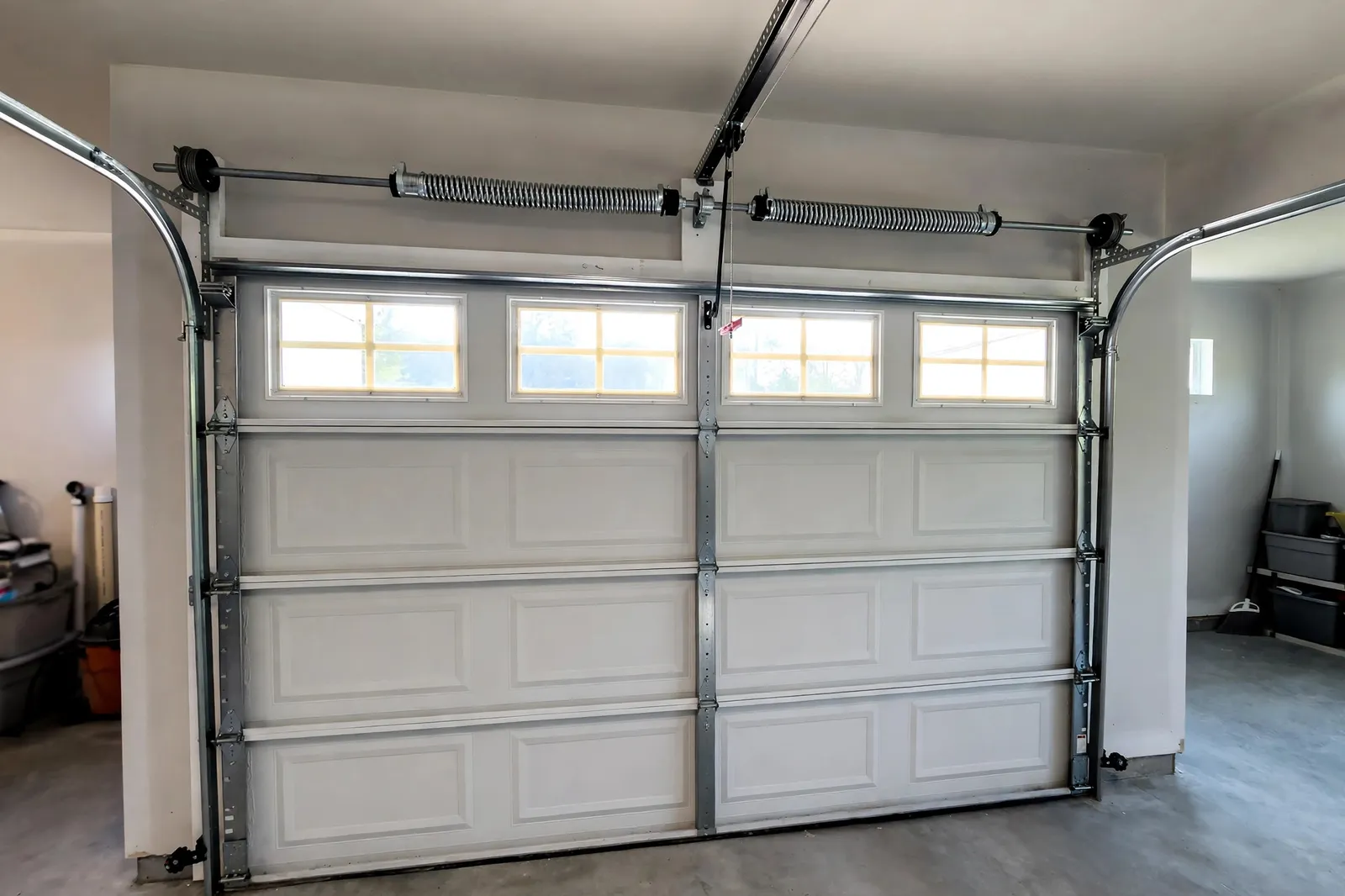
Waldorf, Maryland
Garage Door Spring Replacement in Waldorf, Maryland, with the published national price range up front, the full system inspected on site, and the price stated before any work begins.
A broken garage door spring rarely fails quietly. Most homeowners in Waldorf hear it first: a sharp crack from the garage that sounds like something heavy fell over, and then a door that worked fine at breakfast will not lift more than a few inches by dinner. The spring did the real lifting in that system every single day, and once it snaps, the door it carried becomes dead weight.
That weight is the part people underestimate. A typical two-car door in the subdivisions around St. Charles and Pinefield weighs 150 pounds or more, and an insulated steel door can weigh more than that. The opener was never designed to lift it alone. It only guides a load the springs have already balanced. Running the opener against a broken spring strains the motor, can strip its gears, and turns one repair into two.
Every garage door runs on one of two spring systems. Torsion springs mount on a steel shaft directly above the door opening. They wind tight as the door closes, store that energy, and release it as torque when the door opens, which is what makes a heavy door feel weightless. Extension springs mount along the horizontal tracks on either side. They stretch as the door closes and contract to pull it open. The two systems are not interchangeable, and a door built for one cannot simply be fitted with the other.
Springs are rated in cycles, and one cycle is one full opening and closing of the door. Standard residential springs are commonly rated around 10,000 cycles. A household that runs the door four times a day works through that rating in roughly seven years. Springs with higher cycle ratings use heavier wire and cost more up front, but they stretch the interval between replacements, which matters for busy households where the garage is the main entrance.
Springs also have to match the door. Wire size, coil diameter, and spring length are all calculated from the door's weight and height. A spring that is too weak leaves the door heavy and hard on the opener. A spring that is too strong makes the door want to fly up and slam.
Springs seldom fail without warning, even if the warning goes unnoticed. A visible gap in a torsion spring coil means the spring has already broken at that point. A door that suddenly feels heavy to lift by hand, or that drifts down when stopped halfway, is a door whose springs are losing their balance. Rust streaks on the coils, stretched-out extension springs, and a door that lifts crooked because one side is doing more work than the other all point the same direction.
Cold weather adds its own pressure. Steel grows more brittle in deep cold, and Charles County winters deliver enough freezing mornings that tired springs often let go during a January cold snap.
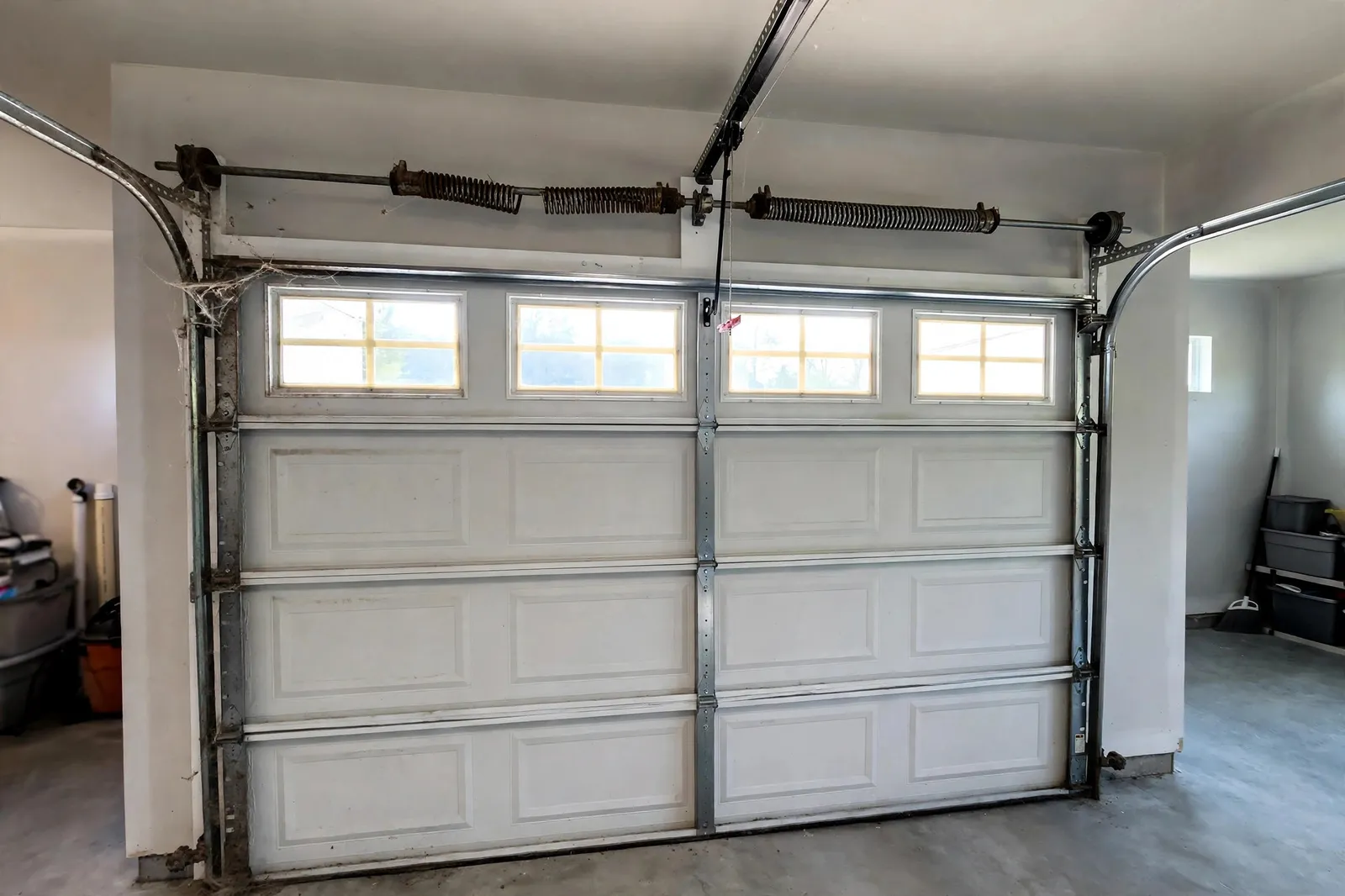
A Carrington homeowner with a 16-foot insulated steel door heard a loud bang from the garage on a cold morning and found the door would rise only a few inches before the opener shut itself down. One torsion spring had snapped, and its partner was stretched and rusted. We fitted a matched pair of higher-cycle torsion springs sized to the door's actual weight, checked the lift cables and end bearing plates while the shaft was apart, then balanced the door so it holds position at half height and lifts evenly with one hand.
No garage door company in Waldorf publishes a local price list for spring work, so the figures here are published national ranges, labeled as exactly that. Use them to plan and to compare against any quote you receive.
Published national figures from Angi 2026 put spring replacement at $150 to $350 per spring, with an average job around $250 for a single spring. Housecall Pro's aggregated 2026 table places torsion spring work at $200 to $500. A service call to diagnose a door problem runs $75 to $150 nationally. Where a job lands inside those ranges depends on the spring system, the size and weight of the door, whether one spring or a matched pair is fitted, and the cycle rating of the springs going on.
One honest note on pairing: when one spring of a pair breaks, the other is usually near the end of its own life. Replacing both at once is one visit and one labor charge instead of two, and it keeps the door balanced evenly across the shaft.
The visit starts with the door secured. A door with a broken spring is never forced, and the opener stays disconnected until the new springs are on and tensioned. We measure the broken spring's wire size, inside diameter, and relaxed length, and weigh the door's pull so the replacements match what the door actually needs.
With the new springs fitted, the door gets a balance test: lifted by hand to half height, it should stay put, neither drifting down nor shooting up. Then the cables, drums, and bearings get checked, the opener is reconnected, and its force settings are confirmed so it is guiding a balanced door instead of hauling a heavy one. You get a full open-and-close demonstration before anyone packs up.
Published national ranges put spring replacement at $150 to $350 per spring, with an average job around $250 for one spring, and torsion spring work at $200 to $500. A diagnostic service call runs $75 to $150. Doors needing a matched pair of springs on a heavy insulated door land higher in the range than a single spring on a light door. Send the quote form with your door size and we will respond with the range that applies to your door.
That is harder and riskier than it sounds. With a spring broken, the door is a dead lift of 150 pounds or more, and it can drop without warning if your grip slips. If a car is trapped, lift only with a second adult helping and keep hands clear of the bottom edge. Otherwise, leave the door down and disconnected from the opener until the springs are replaced.
On a two-spring torsion system, yes, in nearly every case. Both springs were installed together and have flexed the same number of times, so the survivor is usually close to its own breaking point. A matched new pair also balances the door evenly, which protects the opener and the cables from one-sided strain.
Springs are rated in cycles, and one cycle is one opening plus one closing. Standard springs are commonly rated around 10,000 cycles, which a busy household uses up in about seven years. Higher-cycle springs are built with heavier wire and last proportionally longer. Cold snaps shorten the odds for older springs, since steel turns brittle in deep cold.
Torsion springs hold enough wound tension to lift a door that can weigh over 200 pounds, and releasing that tension with the wrong tools or the wrong sequence can cause serious injury. Extension springs under stretch carry the same kind of stored energy. This is one of the few home repairs where the honest advice is to let a crew with winding bars and daily practice handle it.
Look at the wall above the door opening. A metal shaft running the width of the door with one or two large coils mounted on it means torsion springs. Springs that stretch along the horizontal tracks on each side of the door, parallel to the ceiling, are extension springs. Knowing which system you have helps us bring the right parts range for your door.
Tell us what the door is doing, or not doing. We read every request that comes in and respond with the published national range for that kind of work and the next step, starting with a visit to inspect the full system on site.
Prefer to talk it through first? Send the form and we will call you back at the number you give us.